Key Takeaways

It is 2026, and operational resilience is no longer just an aspirational concept; it has now become an expectation. Regulators insist on it, leadership teams prioritize it, and vendors promise it. Yet, despite all the attention it gets, most financial institutions remain stuck at surface-level discussions, struggling to turn the idea into reality.
So, what does operational resilience really mean? Why does it matter? And most critically, how can it be achieved? More often than not, the answer comes down to one underappreciated factor: operational discipline.

Operational Resilience: From Concept to Capability

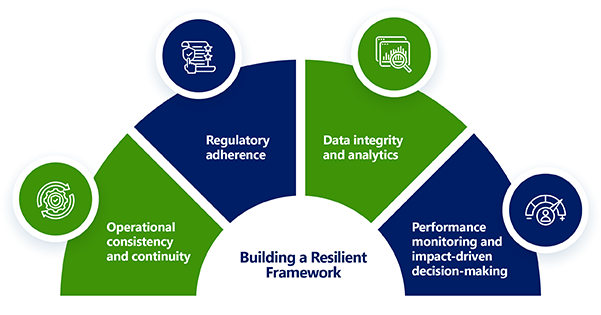
Operational resilience goes well beyond a check-the-box compliance framework. At its core, it is about proactive non-financial risk management, where governance systems, data infrastructure, and operating models work together to ensure that disruptions do not degrade customer experience.

Resilient operations are anticipatory and adaptive by design. They are built to spot challenges before they materialize and respond with agility when they do. For financial institutions, especially, this kind of forward-looking posture creates the operational stability that drives value-based execution and sustainable growth.

This is where operational discipline comes in. It is the less visible but essential force that turns resilience from a strategic intention into an operational reality.

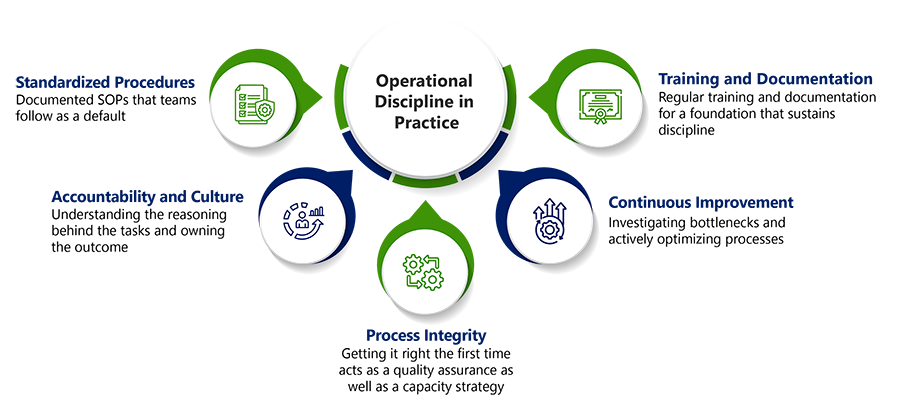
Operational Discipline: Role and Components

Strategy is easy to talk about. Execution is where most institutions win or lose.

Operational discipline is what connects intent to execution. If your goal is to deliver a consistent experience to every customer, it is only as strong as the consistency with which every member of your team follows established procedures every day, every interaction: no exceptions.

Embedding Operational Discipline as a Driver of Growth

Rolling out discipline across an institution is not simple or quick. It takes commitment at every level, including leadership, middle management, and frontline teams, to execute every task accurately, every single time. That is a high bar. But it is the only bar worth setting.

Here’s how you can make it happen:

1. Prioritize consistency over heroics

Consistency compounds faster than intensity. One-time efforts make for great stories; disciplined, repeatable execution builds real capability. The goal is not just to set standards; it is to uphold them consistently at every operational level and across every team. When individual workflows are streamlined and predictable, operations stop being strained and start creating room to grow.

2. Maintain transparency and clarify ownership

Ambiguity is one of the most common (and most costly) sources of operational failure. Clearly defined roles and explicit task ownership drive accountability, giving team members a clear picture of what they are responsible for and what success looks like. Strong operational transparency improves coordination across teams, reduces friction, and cuts down on errors and bottlenecks that arise when responsibilities are fuzzy or shared in name only.

3. Close the gap between metrics and action

Metrics only matter when they drive changes. You can track performance, study the data, and put together smart strategies, but your operations will improve only when these insights translate into execution. The discipline is in the follow-through: building repeatable remediation processes that respond to deviations quickly and systematically, so every performance gap becomes a chance to strengthen the underlying process rather than just putting out the fire.

ServiceDESK: Enabling Discipline at Scale

The role of operational resilience in enabling growth is becoming increasingly clear. The State of the Fraud Report 2026 found that 94% of financial institutions say fraud risk directly influences whether they move forward with new products. In practice, this means that when operational controls lack consistency or risk visibility is limited, innovation slows or stalls.
ServiceDESK supports more structured and disciplined execution by standardizing workflows, clarifying task ownership, and aligning day-to-day activities with defined controls. By increasing visibility into work in progress and surfacing deviations early, it enables teams to respond in a more timely and consistent manner.

Over time, this reinforces process integrity and supports audit readiness, not as a one-time effort but as an outcome of consistency. The result is not just improved control, but a more stable operating foundation that absorbs strain as institutions scale with confidence.

Talk to our team about building operational discipline into your workflows.

Frequently Asked Questions

The ability to anticipate, withstand, and recover from disruptions while maintaining consistent operations and customer experience.

It ensures consistent execution, turning resilience from a strategic goal into a daily operational reality.

By standardizing processes, clarifying ownership, and linking performance metrics directly to action.

Disciplined operations improve governance, reduce risk, and ensure consistent adherence to regulatory expectations.