Fraud Investigation Case Management: How Dynamic Orchestration Reduces Delays and Strengthens Oversight

Key Takeaways

Fraud Operations Are Outgrowing the Queue

Some fraud alerts are easy to resolve. Others involve several accounts, multiple transactions, or different payment channels. What starts as a routine review can quickly become a much larger case. Most queue-based systems are not built to handle these changes easily. An alert is assigned based on the information available at the time. If new findings deviate the direction of an investigation, teams need to reassign the case, involve another team, or arrange additional reviews. Meanwhile, cases sit idle while teams determine who should handle the next step. The problem is not the queue itself but the reliance on fixed models to manage dynamic investigations.
Dynamic case orchestration is the operational answer to these constraints. This article explains what it means in practice, where static queue models break down, what controlled orchestration requires, and how financial institutions can put it into effect.

What is Dynamic Case Orchestration in Fraud Investigations?

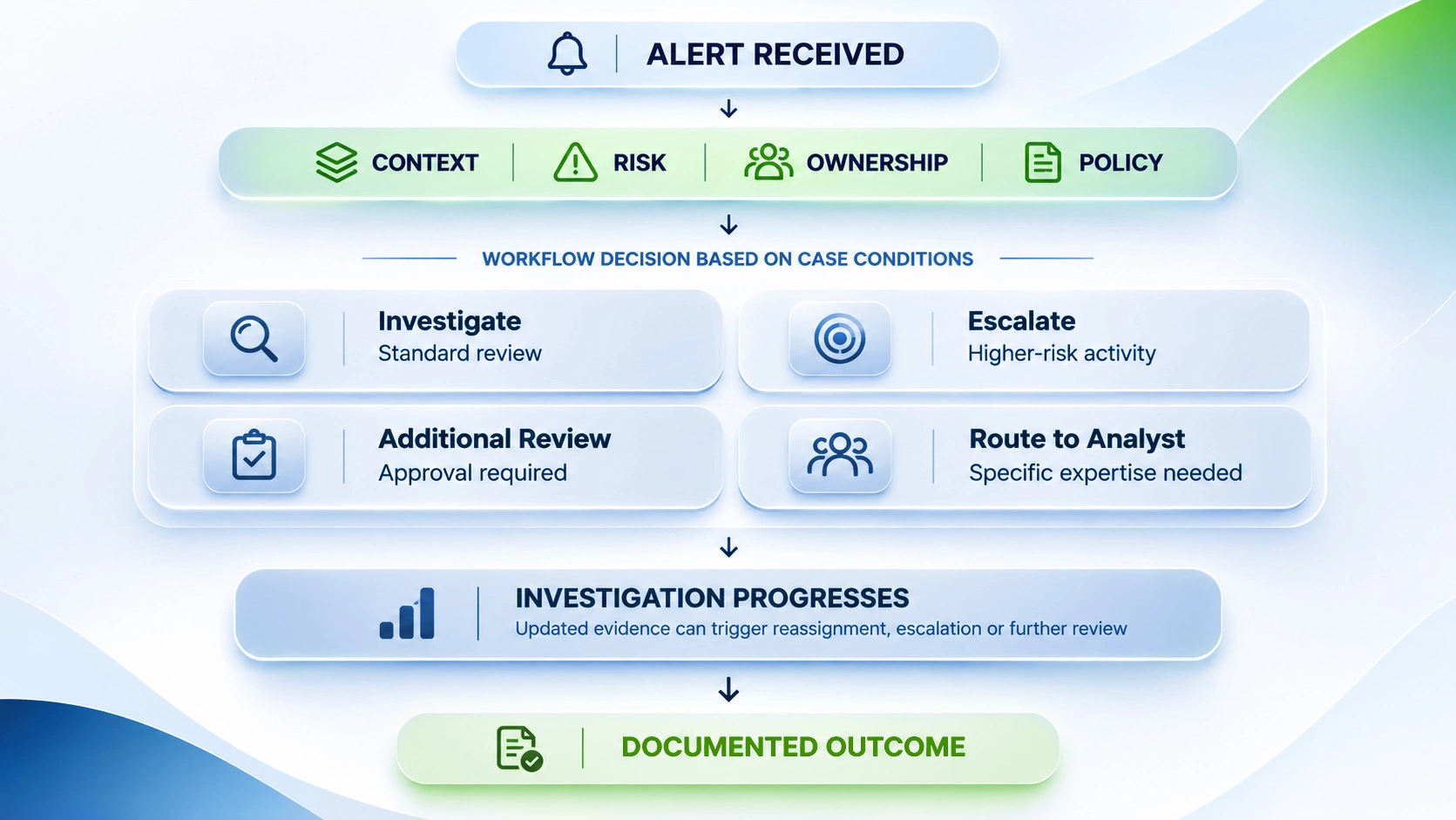
Dynamic case orchestration is a fraud case management approach that automatically routes, escalates, and tracks investigations based on risk level, emerging evidence, investigator capacity, required approvals, and defined policy rules.

This does not mean every case follows a different set of rules. Required checks, approval levels, escalation procedures, deadlines, and records still need to be maintained. The difference is that cases do not have to follow the same fixed sequence when their circumstances are different.

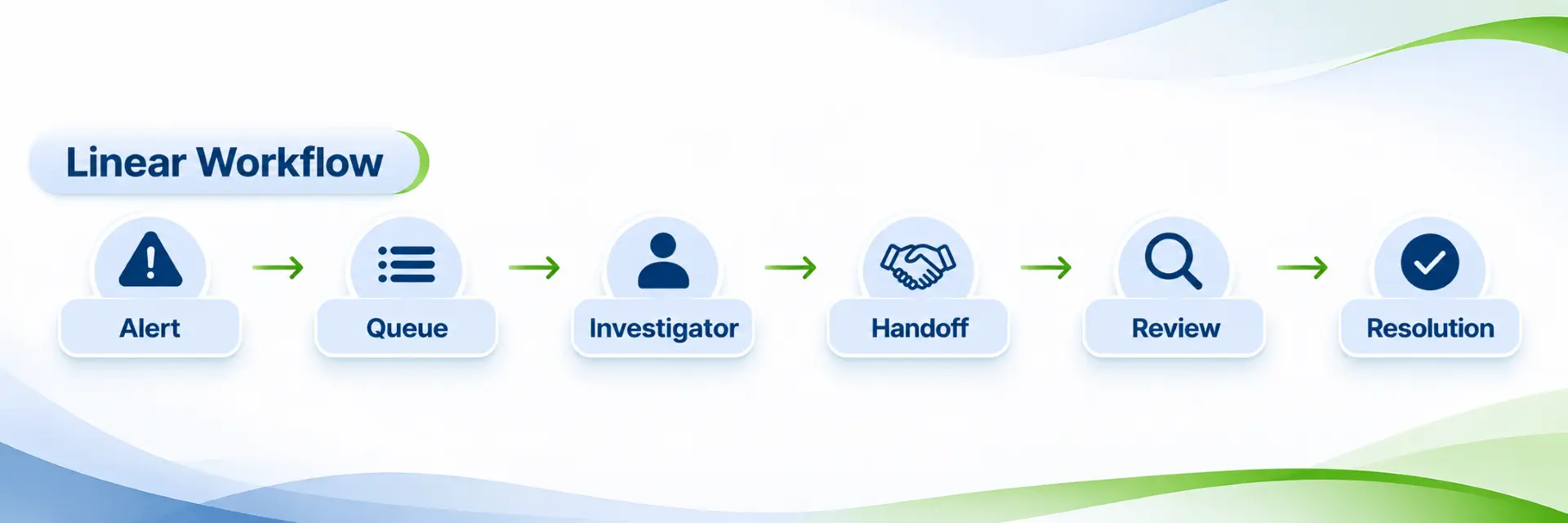
The Linear Model: Built for Predictability, Not Complexity

Traditional fraud operations tend to divide work by alert type, team, or stage of review. This makes workloads easier to organize when cases follow a familiar path.
A few problems come up repeatedly:
These issues become more difficult to manage when fraud patterns change quickly, or investigators need to connect activity across different accounts and payment methods.

What Changes for Fraud Teams with Dynamic Orchestration?

Implementing dynamic case orchestration changes five operational realities for fraud teams.

How CaseHUB Orchestrates Fraud Investigations

For financial institutions looking to put dynamic orchestration into practice, CaseHUB provides an enterprise case management foundation for connecting fraud alerts to the processes, decisions, and actions that follow. Automated alert-to-case creation initiates the investigation, while configurable workflows coordinate assignments, reviews, approvals, and escalations based on defined rules.
AI-enabled decisioning adds another layer to this approach, helping teams distinguish routine cases from those requiring more complex investigation. It supports context-driven routing and workflow progression, helping investigators prioritize their attention while maintaining defined policies and oversight. Rather than adding another queue to manage, it provides an operating foundation built around how fraud investigations actually progress.
Learn more about how the platform supports alert-to-case automation, configurable fraud investigation workflows, and governed case management for financial institutions.